


20 July 2026
Pfister Hotel; Lobby Lounge
During my trip The Milwaukee Public Library, I found five small pieces of ephemera in the archive that added up to one very specific moment in Pfister’s history: World War II, under Ray Smith and his son Ray Smith Jr.
Charles Pfister ended up selling the hotel to Ray Smith Sr. in 1927 after a stroke left him unable to keep running it himself. Smith was Pfister’s longtime friend and colleague, and by other accounts, a former bellboy who worked his way up through the hotel before he ever owned it. By the time these notices went out, Smith was President and his son was Manager.
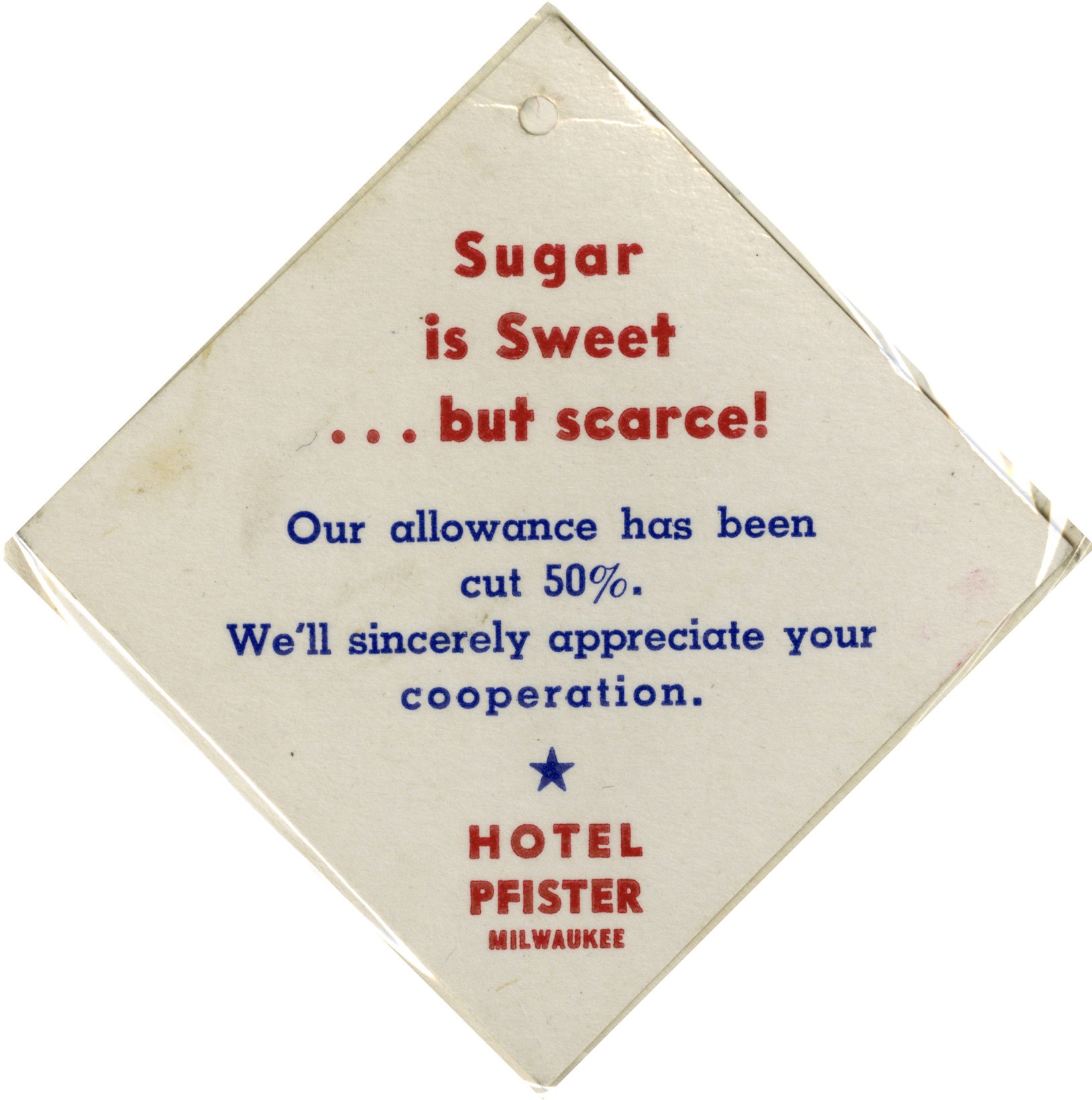
These pieces might not mean much if found on their own, a card about sugar, one about metal… a notice about meatless Tuesdays. But put them side by side and you get a hotel pivoting, week by week, to the ever-changing nature of war.
Something interesting piece of ephemera I found was a card asking guests to limit their stay to 5 days.
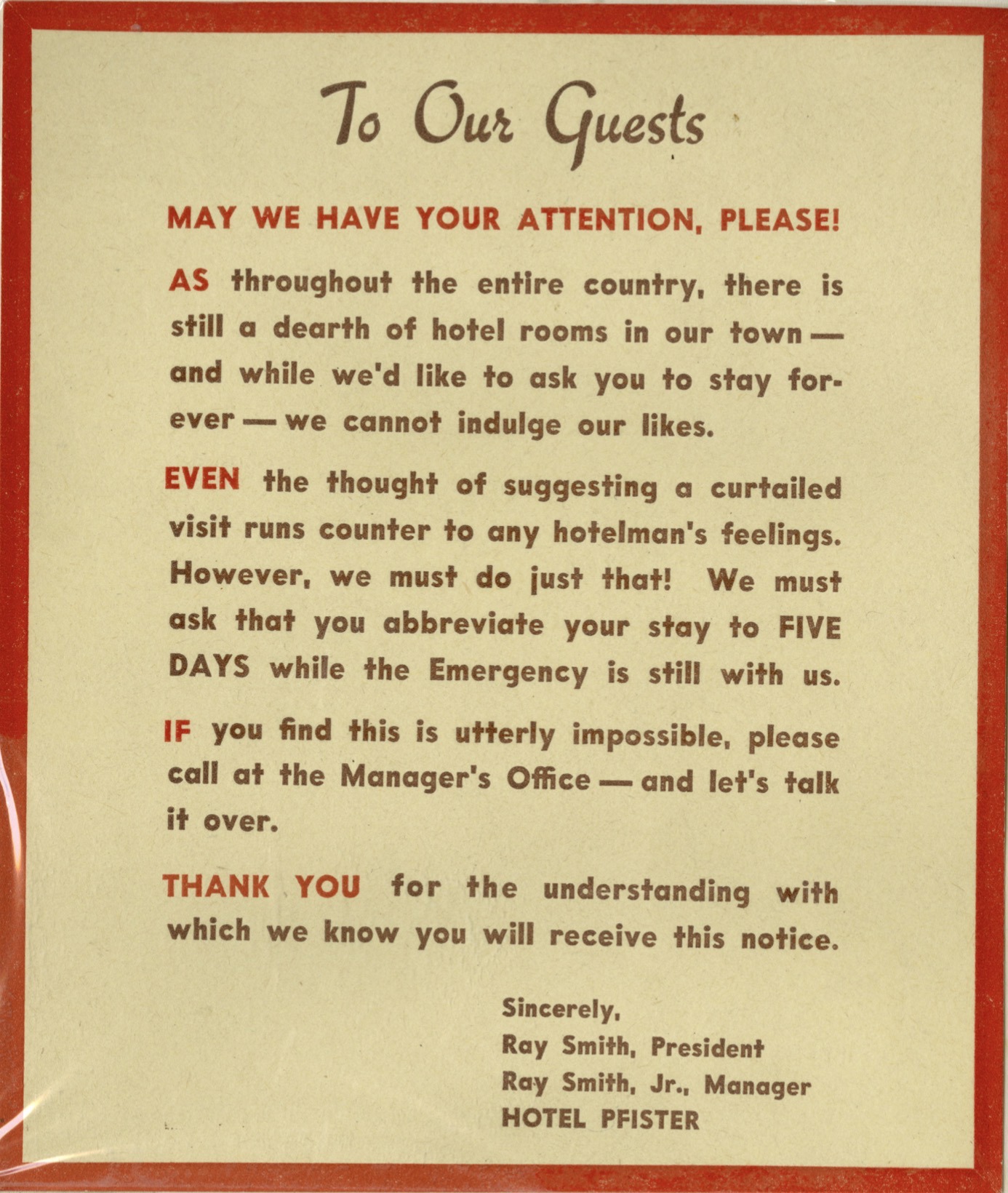
Hotel rooms across the country were scarce during the war, including the Pfister. War workers, military personnel, and families relocating for defense jobs were all competing for the same beds.
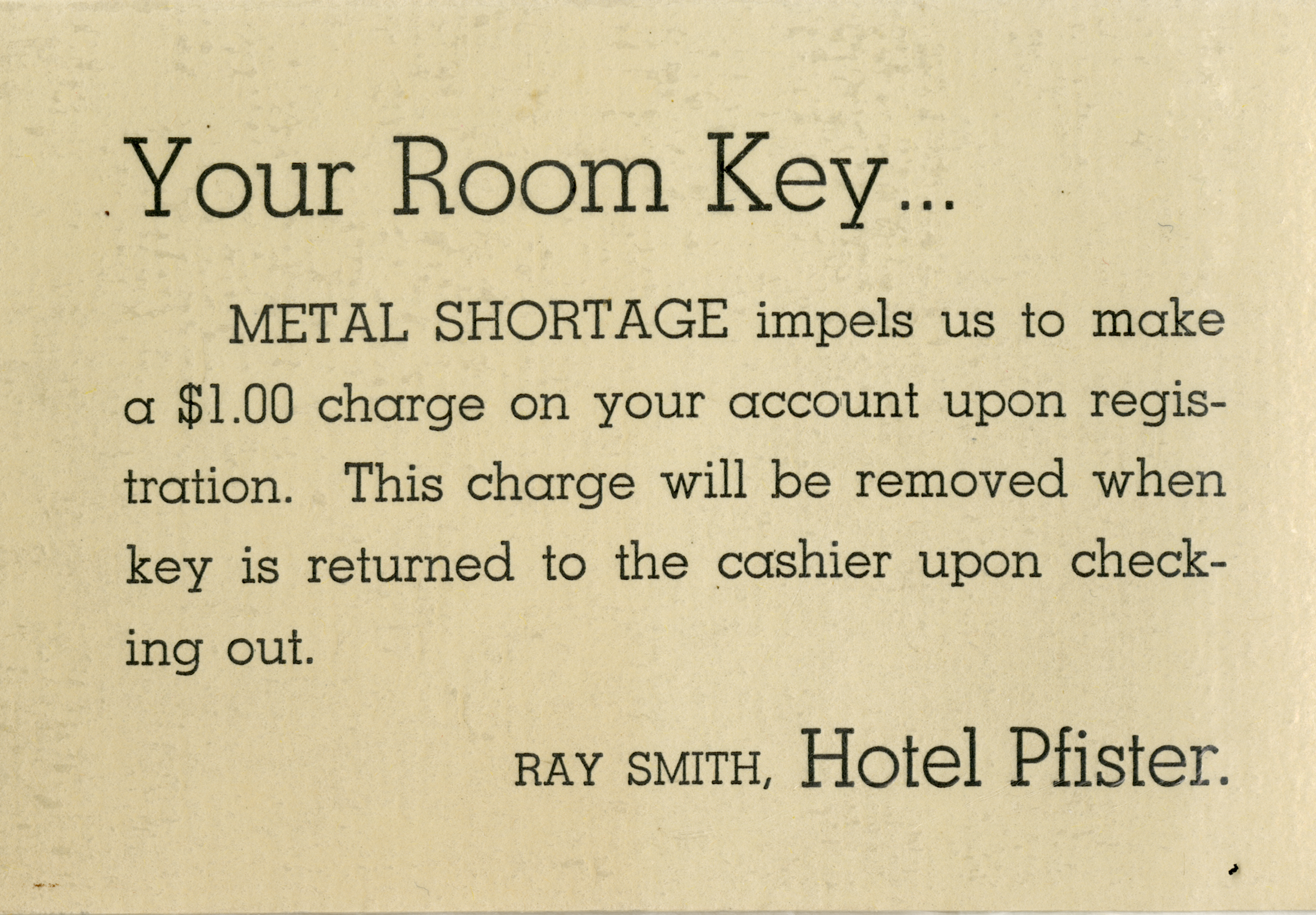
The other four cards make more sense once you’re thinking that way. Metal was going to the war effort, so guests paid a dollar for a room key and got it back at checkout. Federal rationing guidelines shaped every restaurant kitchen in the country, and the Pfister answered with Tuesdays free of meat. The sugar notice states plainly that the hotel’s allowance had been cut in half. Taken together, these aren’t the signs of a hotel struggling to get by. They’re a hotel running at full capacity, shaped by shortages nobody in Milwaukee had any say over.
I wondered, too, about the word “Emergency,” capitalized, in the five-day notice.
Roosevelt had proclaimed an “unlimited national emergency” back in May of 1941, months before Pearl Harbor, and government agencies kept using “the emergency” as their standing term for the whole wartime period that followed. So the Pfister wasn’t softening anything or dodging the word war. It was speaking the government’s own language back to its guests, and everyone reading that card in 1942 would have known exactly what it meant.
There’s something familiar in all of this, even now. Anyone who’s stood in front of a half-empty shelf, or tried to book a hotel room during a stretch when everyone else seemed to want one too, knows the particular feeling of demand outrunning supply. The Pfister’s guests in 1942 weren’t dealing with anything mysterious. They were dealing with scarcity, the same as the rest of the country, and the hotel was doing what it could to manage it with a little grace and a lot of small print.
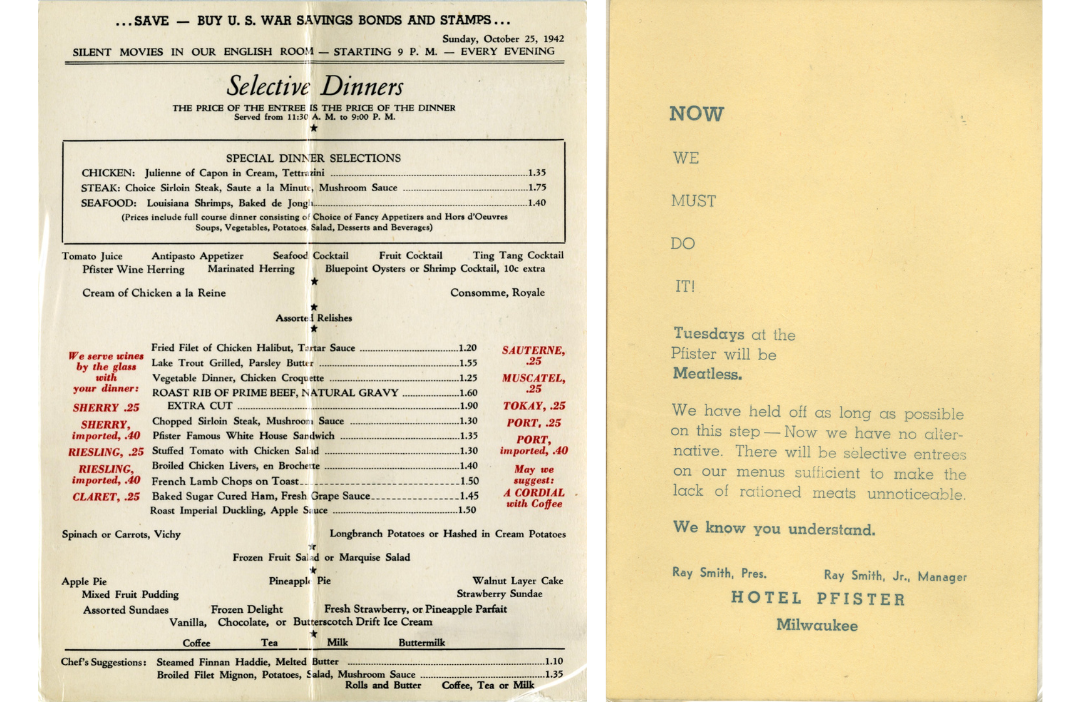
What these five cards show, in the end, is a hotel doing its part. Cutting sugar. Skipping meat on Tuesdays. Charging a dollar for a key because there wasn’t enough metal to spare. Asking guests, politely, to make room for the next family that needed a bed. Small inconveniences, all pointing at something much larger happening outside the hotel’s front doors.
— Megan